
The Future of Energy Innovation Lies Between the Sectors
A reflection of All Energy 2026 and results of SPEERI’s collaborate poll
By Jennifer Smart (SPEERI Deputy Director (Energy)
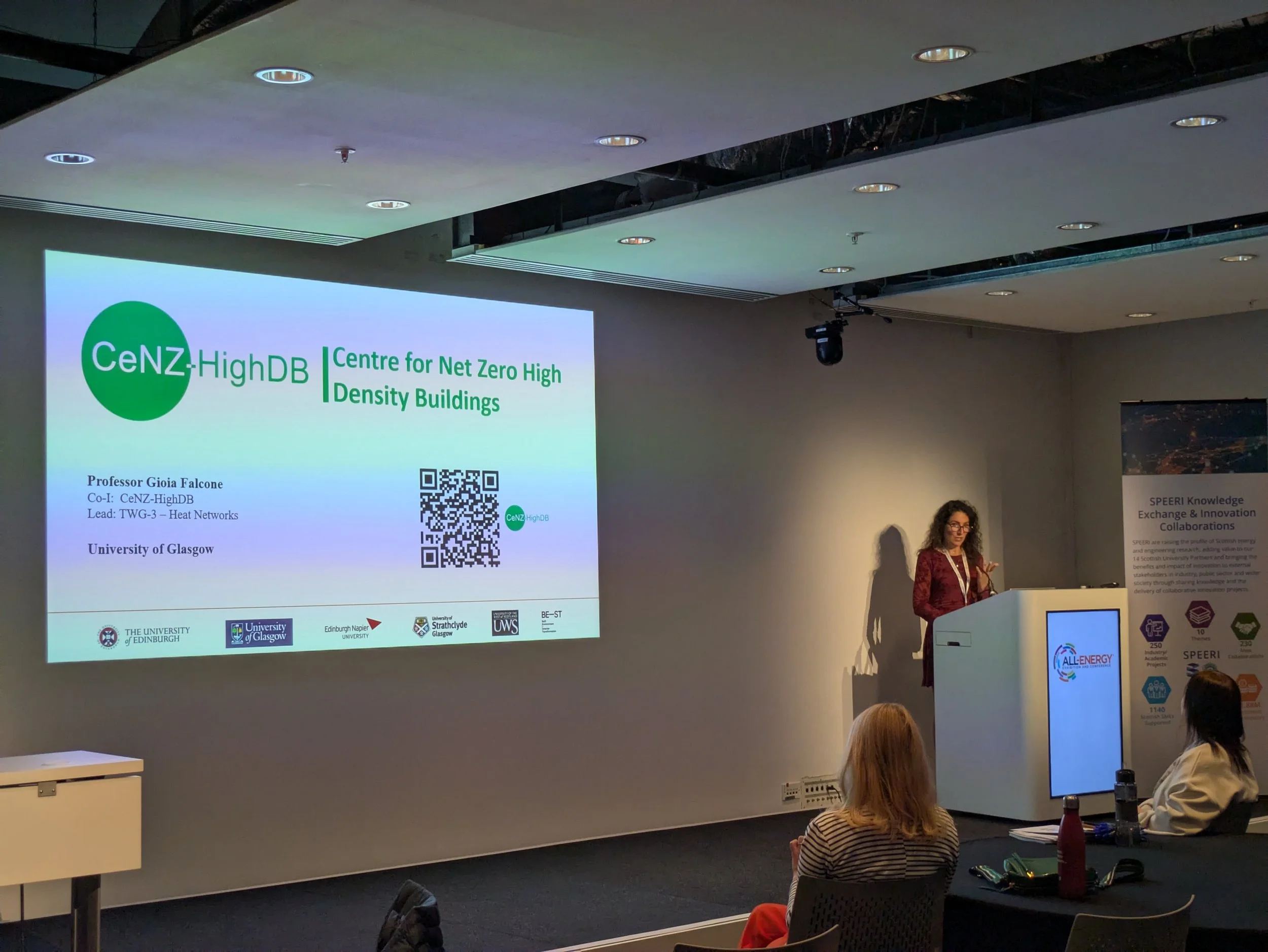
Walking around All Energy 2026 at the SEC in May this year, it is easy to think in terms of technologies.
One conversation focuses on hydrogen. Another explores offshore wind. Elsewhere, delegates debate batteries, AI, robotics, clean heat or grid infrastructure.
Yet increasingly, the most interesting discussions are not taking place within these individual sectors. They are happening between them.
That was one of the clearest messages to emerge from conversations at All-Energy 2026, where SPEERI designed a poll asking delegates from industry, academia and the public sector where they see the greatest opportunities for innovation over the next three to five years.
The largest proportion of respondents identified innovation occurring at the intersection of two or more sectors, significantly ahead of opportunities within individual disciplines. This reflects a growing recognition that many of the challenges facing the energy transition can no longer be solved through single-sector thinking alone.
Whether the challenge is integrating renewable generation, balancing increasingly complex electricity networks, deploying hydrogen at scale or improving industrial efficiency, success increasingly depends on bringing together expertise from multiple domains.
In practice, this means combining energy knowledge with digital capability, advanced manufacturing, data science, automation, policy and systems thinking.
Digital is becoming the common thread
One of the most striking findings from the poll was the importance respondents placed on digital capability.
When asked which sectors could most accelerate innovation if organisations worked together more closely, Digital, Software and Data emerged as the most frequently selected response, closely followed by Academia and Research Organisations, and Robotics, AI and Autonomy.
This reflects a wider trend visible across the energy sector.
Digital technologies are no longer viewed as a standalone area of innovation. Instead, they are becoming an enabling layer across almost every aspect of the energy transition.
From predictive maintenance in offshore wind, to digital twins for infrastructure planning, to AI-enabled optimisation of energy systems, data and digital tools are increasingly shaping how energy assets are designed, operated and managed.
Yet the conversation is not simply about technology.
Many organisations now recognise that the challenge is often not developing new tools, but ensuring access to data, creating interoperability between systems and building the partnerships needed to deploy solutions effectively.
Connecting technologies, people and ideas
Another notable finding was the prominence of combinations that bring together traditionally separate disciplines.
Respondents highlighted strong opportunities at the interface between AI and energy infrastructure, hydrogen and industrial decarbonisation, and power electronics with renewable energy integration.
“The future energy system is unlikely to be defined by a single breakthrough technology. Instead, it will be shaped by how effectively technologies, sectors and organisations can be connected together.”
These pairings reveal a broader shift in thinking.
The future energy system is unlikely to be defined by a single breakthrough technology. Instead, it will be shaped by how effectively technologies, sectors and organisations can be connected together.
For universities, industry and policymakers alike, this presents both an opportunity and a challenge.
It requires new forms of collaboration, different skills, greater openness to interdisciplinary working and a stronger focus on integration rather than individual technologies.
Looking ahead
Scotland has long been recognised for its strengths in energy innovation, engineering and research. The next phase of the transition may depend less on the depth of expertise within individual sectors and more on the ability to connect those strengths across traditional boundaries.
The message emerging is the future of innovation lies not within sectors, but between them.
And as energy systems become more connected, digitalised and data-driven, the organisations that can bridge disciplines, translate expertise and build effective partnerships will play a critical role in shaping the transition ahead.
